Showing posts with label fluoride. Show all posts

Sunday, December 11, 2022

The truth about toothpaste

As a dental hygienist, I get LOTS of questions about toothpaste. Companies make a lot of claims about what their toothpastes do, from whitening to enamel protection. Basically, so long as a toothpaste has some kind of fluoride in it, that's what should be used. Fluoride is necessary to remineralize and protect teeth. 

Some toothpastes have ingredients such as stannous fluoride and potassium nitrate that can help with sensitivity. Potassium nitrate has worked for me personally. Since sensitivity can be caused by various dental issues including receding gums, cavities, and dry mouth, sensitivity should be discussed with your dentist or dental hygienist. 

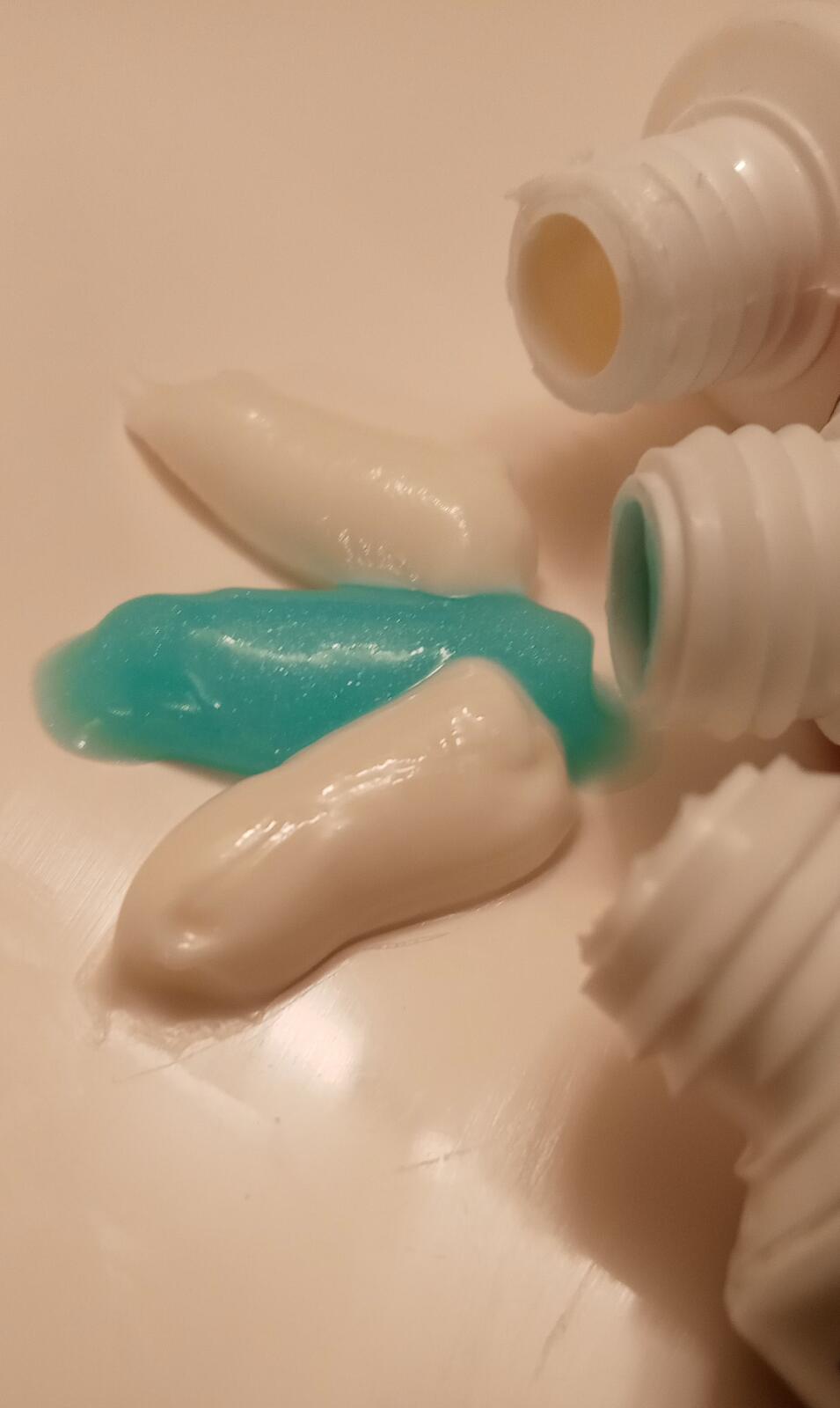
I work at two dental offices and the toothpaste samples given to patients vary. I rely on my colleagues and my professional network to learn about any problems or issues with toothpastes rather than claims from the companies that make them. For example, there was a toothpaste on the market that had blue beads in it. When hygienists began finding these beads embedded in people's gums, the alarm was sounded and the manufacturer corrected the problem. Stannous fluoride has had issues as well. It was found to stain the teeth and manufacturers have since added ingredients to counteract this. 

In addition to stannous fluoride, sodium fluoride and sodium monofluorophosphate can be found in toothpastes. They are all effective and essentially do the same thing: provide some fluoride directly to the teeth and into the saliva. A dentist may prescribe a toothpaste with a higher amount of fluoride if a patient needs it due to their dental condition.

Finally, teeth must be brushed regularly regardless of the type of fluoride in the toothpaste. It seems simple, but people rarely brush for long enough, or brush only once a day. Brushing and flossing physically removes plaque germs from the teeth and gums. While toothpaste is important, this is the most important aspect of caring for the teeth. Brushing the teeth 2 to 3 times a day for 2 minutes (set a timer) will clean teeth and create a healthy mouth.

These blog posts are not intended to treat, diagnose, cure, or advise about any dental or medical condition. Please see your dentist or doctor for any treatment you need. 


Saturday, June 27, 2020

Your Teeth and COVID

Like many industries and professions, dentistry has changed as a result of COVID. There are new recommendations and guidelines, and dental professionals are striving to ensure the safety of patients and staff as offices open back up.

So what has changed? As a patient there are many new procedures you may encounter when you go for dental treatment or for a dental cleaning. Here are some new things you may find:

Your dentist or dental office staff calls you prior to the appointment to ask you questions. These include questions about COVID-like symptoms, any new medical conditions or medications, and recent travel. You may be asked to do a "teledental" call that includes video to evaluate the problem you are having or if an appointment is needed at this time.

You are asked to wait outside or in your car prior to your appointment, or find that you are the only person in the waiting room. In the waiting room, there will no longer be any reading materials, so bring your own! 

The dental office will request you wear a mask or face covering over your nose and mouth to your appointment. How will you have your teeth worked on then? More about that in a bit.

Your temperature will be taken. A temperature of 100.4 or higher is considered a fever and you will be asked to reschedule your appointment. If you aren't feeling well, save yourself the trouble and stay home. 

You will be asked screening questions, again. A lot can actually happen in 24 to 48 hours when it comes to COVID. Depending on the area and infection rate, some dental and medical offices may require patients to have COVID testing (such as a nasal swab to test for active viral infection) prior to the appointment.

You may be asked to move about the office in a certain way. Dental offices with more than one accessible entrance and exit may ask that you enter in one door and leave through another. Offices with open bay areas may ask that you take a certain route as you walk. Often, this will be explained to you prior to your appointment.

Hygiene on Planet COVID
Once you have gotten to this point, the dentist, dental assistant, and dental hygienist, may look like people equipped to do hazmat decontamination. Starting at the top, hair coverings, goggles, face shields, masks, respirators, gloves, full lab coats, disposable gowns, and shoe coverings are being worn over traditional scrubs.

The exam or treatment room will have some new equipment, too, such as air filter units and/or new suction equipment designed to remove aerosols formed during treatment.

You will be asked to pre-rinse with a solution of hydrogen peroxide or similar type of rinse. This is when you finally remove your mask! 

You may find that your teeth are cleaned using tools different than those you are familiar with. Many dental hygienists are forgoing the use of electronic instruments, such as a cavitron, because they create aerosols that can contain the virus and take a long time to settle. Instead they are using hand scaling instruments. No worries there, your dental hygienist is a trained professional, however, it may take longer to have your teeth cleaned. 

In dentistry, infection control is done in a way that treats all patients as infectious. Because a person with COVID can be asymptomatic and still spread the virus, keeping aerosols as low as possible is considered to be safer. Likewise, your dentist may treat your small cavity with methods that don't require drilling, such as silver diamine fluoride, or interim restorative materials, that require less drilling. This may depend on what is going on in your community with regard to COVID rates of infection as well as your dental condition.

Your hygienist may not be her usual talkative self. Everyone has different personalities, but dental hygienists are known to be talkers, (if I do say so myself and may be so bold to generalize.) With all the extra equipment and new ways of working, your hygienist may not be up to conversation. 

These times are difficult, to say the least, and there is still much unknown about SARS-CoV-2, the virus that causes COVID-19. It is important that everyone follow the recommended precautions to keep each other safe. If you are nervous about going to your dental appointment and do not have an urgent or emergency dental problem, it may be better to postpone it. If you can delay your dental cleaning or treatment, make sure you are doing your daily home care of brushing with a fluoride toothpaste and flossing, and following any instructions from your dentist.  If you must or want to go for a dental appointment, make sure to ask any questions you may have about any new procedures you are asked to follow. If you are in pain or have a dental problem do not delay to call your dentist.

This blog and post are not intended to treat, diagnose, cure, or advise about any dental or medical condition. Please see your dentist or doctor for any treatment you need. Take care and be safe!


Sunday, February 16, 2020

Teeth are for everyone

February is National Dental Children’s Health Month but it’s a good time to think about the health of your mouth no matter what your age. Dental health is a life-long endeavor and teeth need to be taken care of at every step along the way.
Women thinking of getting pregnant should go for a dental visit! Men who plan to be dads should go, too. Anyone planning to care for a child can decrease the risk of that child getting cavities by taking care of problems with their own teeth.
During pregnancy, dental care is totally safe and regular dental visits are encouraged. Inflammation in the mouth can affect the unborn child and is even associated with preterm birth.
Babies are born with all their baby teeth under their gums. Infant gums should be wiped with a soft, damp cloth after feedings to keep the mouth healthy because teeth start to come in at about 5 months of age. Breastfeeding a child is important to a child’s mouth development as it helps widen the roof of the mouth and contributes to having teeth that come in straight. A baby should never be put to bed with a bottle with anything in it but water as this can cause cavities. The American Academy of Pediatrics and the American Dental Association recommend a child’s first dental visit by age 1.
From the first tooth on, teeth should be brushed daily with a smear of fluoride tooth paste up to age three, a pea-sized amount ages three and up, and with supervision of brushing till age nine. Baby teeth really matter because they help with speech development and nutrition, and since kids lose them slowly until age 11 or 12, baby teeth are needed to hold the space for the adult, permanent teeth coming in.
Children should be encouraged to eat whole fruits and vegetables and avoid sugary drinks. A rule to live by for dental health is water anytime, milk with meals, sweet drinks - skip it! This goes for adults as well because ‘we are what we eat and drink’ and good nutrition is as important to teeth as it is to the rest of the body.
Adolescents, teens, and college-aged kids can really slack-off with personal hygiene and should be encouraged to continue with daily brushing and flossing. Scheduling regular dental visits during school breaks and summer breaks is a good way to ensure any dental problems are caught early. Adults are busy and can slack off on regular dental visits and hygiene, too.
total health-ym
There is especially a lack of flossing, which is needed to get rid of germs between teeth. Keeping floss handy and within reach at home, in the car, in your pack or purse, helps keep this good habit top of mind. Flossing keeps the gums healthy. Bleeding gums are not normal. Brushing and flossing regularly reduces bleeding and helps avoid worse problems with the gums and teeth down the road. It is important to see a dental professional right away if you are concerned about your teeth, gums, or having any mouth pain.
Finally, keeping your mouth healthy is not only good for your whole body, it is good for your wallet. A permanent, adult tooth that gets a cavity (which is an infection of the tooth) is now a weakened tooth. If the mouth continues to be neglected, that cavity can come back under a filling, get bigger, need a crown, a root canal, or even be lost and need to be replaced with a bridge or implant. It is estimated that one tooth can cost well over $6,000 to repair over a person’s lifetime.

Taking care of your teeth truly can pay off!

This blog and posts are not intended to diagnose or treat and should not be taken as medical or dental advice. If something is bothering you, say something. Your medical and dental professionals can help.

Friday, August 2, 2019

What's in the (sparkling) water?

I often get questions about sparkling waters, seltzers, and club sodas. Do they damage the teeth? Are they healthier to drink than soda? What about fruit-infused, fruit-added, or fruit-flavored water?
Seltzer


Sparkling water, seltzer and club soda differ only slightly from each other. Seltzers and club sodas are injected with carbon dioxide gas to make them bubbly, however, club soda also has minerals added. Sparkling water is naturally bubbly and has minerals that are naturally from that water source. Sparkling water and club soda may have sodium in small amounts. Usually, all three have zero calories. If "natural flavors" have been added that means the drink also contains fruit flavors, spices or oils.

The important thing to remember when it comes to tooth damage from drinks are the things that need to be present to cause damage in the first place: plaque germs, sugar and acid.

Although sparkling waters, club sodas and seltzers are healthier than sweetened colas and sodas, they are somewhat acidic compared to plain water. If fruit flavorings are added, the nutrition label should be checked for sugar. Plain water with fruit slices or juices added contain sugar and acid from the fruit. Brushing and flossing should be done daily to ensure that the mouth and teeth are as germ-free as possible. Brushing should not be done immediately after drinking an acidic drink. It is best to wait at least 30 minutes. 

The best drink for mouth and teeth health is plain water. If the water in your community is fluoridated, that's even better. If you need more pep in your drink, sparkling mineral water, seltzer, club soda or water with some added fruit slices, are healthier alternatives to sugar-sweetened sodas and other beverages like sweet teas or sports drinks.

(Don't make the mistake of grabbing tonic water! Tonic is sometimes used in cocktails. It contains quinine, which tastes bitter and was once used used as a medicine in higher concentrations. Tonic also contains sugars and is high in calories.)

What's your favorite bubbly?

Here's a link to a classic Seinfeld clip "I wanted seltzer, not salsa!": https://youtu.be/evYSwr_D8OU

For more on unhealthy and tooth friendly drinks check out some of my previous posts!
https://mydentalhygienist.blogspot.com/2016/04/soda-skip-it.html

https://mydentalhygienist.blogspot.com/2015/11/you-are-what-you-drink.html


This blog and posts are not intended to diagnose or treat and should not be taken as medical or dental advice. If something is bothering, say something. Your medical and dental professionals can help.

Monday, July 28, 2014

Toothpaste

I get lots of questions from patients about toothpaste.  The most common questions are about which toothpaste to use and which toothpaste I use.

Unless you have a specific dental condition, such as tooth sensitivity, or a condition for which you need a prescription strength toothpaste, I don't recommend any particular brand or kind.  Personally, I use the cheapest brand on sale that has sodium fluoride in it.  However, to treat my intermittent tooth sensitivity, I use a toothpaste that contains potassium nitrate.  (These toothpastes may be labeled "sensitive" or "sensitivity."  Check the "Drug Facts" label on the box for the active ingredients.)  In the office I use a professional formula to pre-treat patients who have tooth sensitivity.  These products work by blocking pores in the dentin portion of your tooth where sensitivity can occur due to receding gums or worn enamel.*  (Sensitivity may also be due to cavities or build up of tartar (also called hardened plaque or calculus) in which case toothpaste won't help.)

Another question I get is about whitening toothpaste.  Unless a toothpaste contains hydrogen peroxide or carbamide peroxide, ingredients that actually bleach the teeth, any whitening effect is more likely from consistently brushing your teeth.  Only the active ingredient supplies the desired effect of the product.  Some toothpastes contain triclosan or stannous fluoride, for example.  These have anti-bacterial properties that may help with gingivitis.  There are also many "inactive" ingredients in toothpaste that contribute to the abrasiveness, smoothness or taste of the product.  Sodium bicarbonate, also known as baking soda, and silicates are stain removers found in toothpastes.

"Re-enamelizing" or "re-mineralizing" is a question of interest as well.  Once enamel is gone it's gone.  However, fluoride can bind with minerals in the tooth structure to form a protective layer on the surface of the tooth.  This is the basis of the claim that toothpaste prevents "de-mineralization" of the teeth or encourages "re-mineralization," and the reason that fluoride "strengthens" teeth.  Fluoride also has anti-bacterial properties and so may help to reduce germ levels which contribute to the formation of acid.

How about the abrasiveness of toothpaste?  Can toothpaste itself damage the teeth?  I recently found some data regarding the RDA or Radioactive Dentin Abrasion of toothpaste, also referred to as "Relative" Dentin Abrasion.  This is how abrasiveness of toothpaste is rated in a lab setting and must be in a certain range to be approved by the Food and Drug Administration (FDA) and get the seal of the American Dental Association (ADA).  Unfortunately, while there are some online charts that cite these numbers for toothpastes, I can't verify the year or original source of the information.  (If I do, I'll post it.)  Some toothpaste is definitely more abrasive than others.  What I recommend is calling the manufacturer directly and asking them for the RDA, or abrasiveness rating, of the product.  This is sometimes considered to be a "trade secret."  They may just give you a range.

Whatever type of toothpaste you use, what is most important is the mechanical removal of plaque from your teeth.  This means that you should be gently brushing at least two times a day for two minutes using a SOFT toothbrush with a small amount of toothpaste.  The goal is to remove plaque, which is a colony of germs attached to your teeth, before it hardens.  Just like hand washing, toothbrushing must be done thoroughly to ensure the removal of the germs.  Regular brushing of the teeth is more important than the type of toothpaste you use.  Just take care to be gentle.

If the bristles on your toothbrush are smashed after using it two times you are brushing too hard!  If you are an "agressive toothbrusher" an electric toothbrush is probably NOT for you.

If you are are only brushing for 30 seconds you are not brushing long enough.

If you are using so much toothpaste that it only takes you a week to go through the entire tube, you are using too much.

When you brush your teeth, you should also be brushing your gums, another reason to be gentle.

For a great description and illustration of how to properly brush (from the American Dental Hygienists' Association website) go to:
http://www.adha.org/resources-docs/7221_Proper_Brushing.pdf

Please use the comment section if you have any questions or comments or if you'd like to share the name of your favorite toothpaste!

*You should discuss gum recession, enamel wear and tooth sensitivity with your dental hygienist or dentist. 

This information is not intended to treat or diagnose any dental or medical condition.  Please contact your medical or dental professional for treatment and information.