Showing posts with label flossing. Show all posts

Sunday, December 11, 2022

The truth about toothpaste

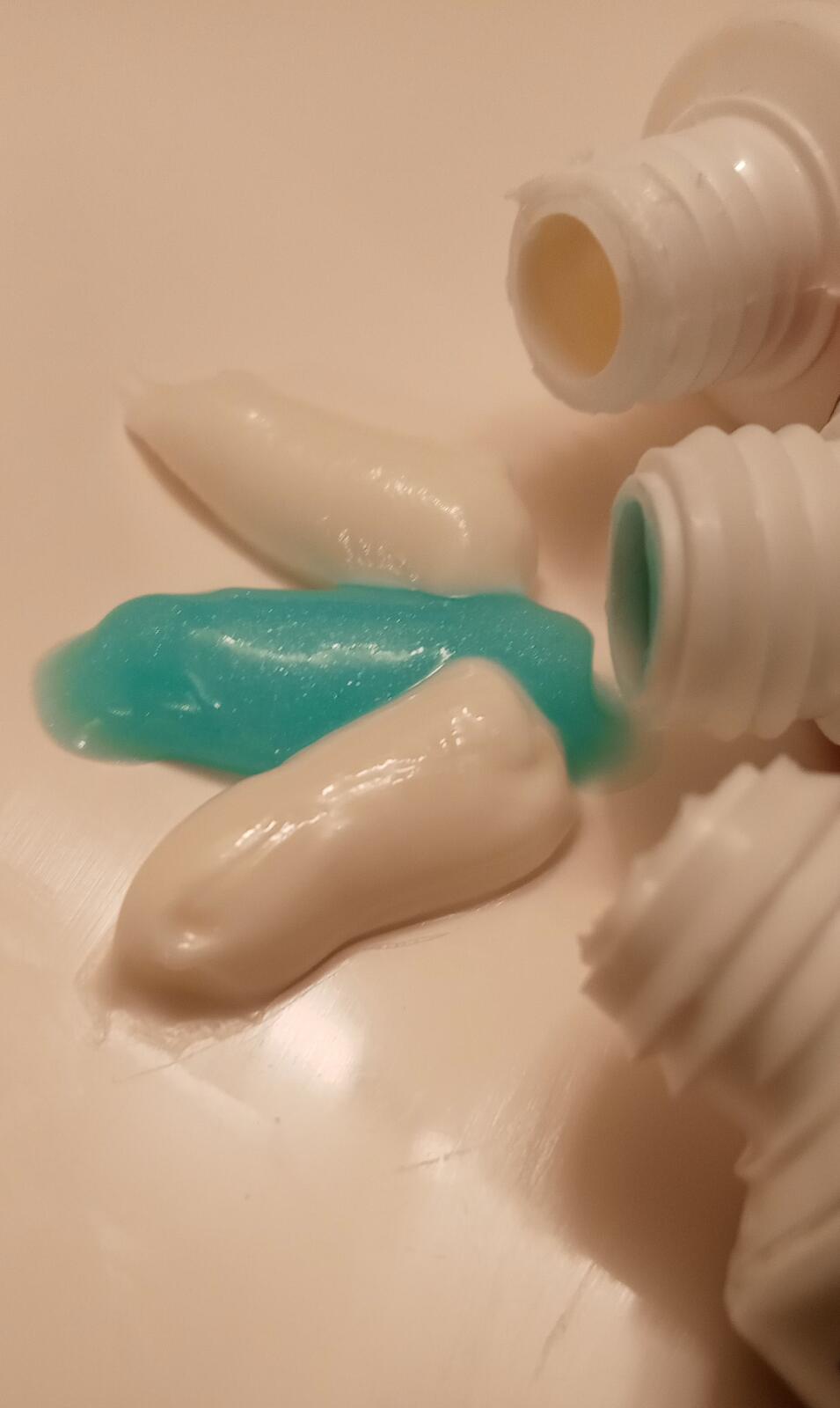
As a dental hygienist, I get LOTS of questions about toothpaste. Companies make a lot of claims about what their toothpastes do, from whitening to enamel protection. Basically, so long as a toothpaste has some kind of fluoride in it, that's what should be used. Fluoride is necessary to remineralize and protect teeth. 

Some toothpastes have ingredients such as stannous fluoride and potassium nitrate that can help with sensitivity. Potassium nitrate has worked for me personally. Since sensitivity can be caused by various dental issues including receding gums, cavities, and dry mouth, sensitivity should be discussed with your dentist or dental hygienist. 

I work at two dental offices and the toothpaste samples given to patients vary. I rely on my colleagues and my professional network to learn about any problems or issues with toothpastes rather than claims from the companies that make them. For example, there was a toothpaste on the market that had blue beads in it. When hygienists began finding these beads embedded in people's gums, the alarm was sounded and the manufacturer corrected the problem. Stannous fluoride has had issues as well. It was found to stain the teeth and manufacturers have since added ingredients to counteract this. 

In addition to stannous fluoride, sodium fluoride and sodium monofluorophosphate can be found in toothpastes. They are all effective and essentially do the same thing: provide some fluoride directly to the teeth and into the saliva. A dentist may prescribe a toothpaste with a higher amount of fluoride if a patient needs it due to their dental condition.

Finally, teeth must be brushed regularly regardless of the type of fluoride in the toothpaste. It seems simple, but people rarely brush for long enough, or brush only once a day. Brushing and flossing physically removes plaque germs from the teeth and gums. While toothpaste is important, this is the most important aspect of caring for the teeth. Brushing the teeth 2 to 3 times a day for 2 minutes (set a timer) will clean teeth and create a healthy mouth.

These blog posts are not intended to treat, diagnose, cure, or advise about any dental or medical condition. Please see your dentist or doctor for any treatment you need. 


Wednesday, May 26, 2021

LA is hip on teeth

Lights, camera, action! Los Angeles may be known as the movie capital of the world, but did you know they are so 'with it' when it comes to tooth health? LA County has embarked on a massive campaign around tooth health on social media, TV, and radio. Included are great videos and engaging materials to bring the health of the mouth, especially for children, top of mind. 

Here is an adorable video they created:


Check out the entire campaign here:

Tuesday, April 28, 2020

When little things become big problems

These past several months of COVID-19 crisis have proven that health is everything and when it comes to health, it's often the little things that count: wash your hands, cover your mouth when you cough, don't touch your face, stay home from work when ill. It seems so simple.

Tooth brushes. photo: YM
And as anyone can see, when the little things aren't taken care of, problems get worse, quickly. While the current measures are hard on everyone, they can still be accomplished: physical distancing, wearing masks or mouth and nose coverings, staying home if at all possible.

For those fortunate enough to be healthy, it is important to keep in mind the daily habits that can help most people emerge from this crisis with health intact. Among other things that can be done to stay healthy, take walks, work out, avoid overeating or too much snacking, keep in touch with loved ones by phone, video, or email, take any regularly needed medications, and brush and floss each day.

Brush and Floss. photo:YM
Currently, most dentists and dental professionals are seeing only emergency patients: those with pain, swelling, or infection. They are trying to keep people out of emergency rooms and safe. Preventative care, like regular dental cleanings, need to be postponed. Plaque, left to grow in the mouth and on the teeth, causes inflammation of the gums and increases inflammation in the body. A cavity, once it starts to form, gets larger without treatment. The daily practice of brushing at least two times a day with a fluoride toothpaste for two minutes and flossing at least once a day can help maintain oral health, and avoid a dental emergency.

If you haven't been taking care of your teeth like you could, now is the perfect time to start. Once it's part of a daily routine, it can remain so for the rest of your life.

Hoping that you and your loved ones are safe and well.

TIP: If you have been sick, throw away your old toothbrush and use a new one. Always allow your toothbrush to air dry and store it in a cabinet.

This blog is not intended to diagnose or treat any dental or medical condition. If you are feeling ill, contact your dental or medical provider. Stay safe and well.

Sunday, October 20, 2019

Interview With a Vampire: Taking a (healthy) Bite Out of Fall


October and thoughts turn to pumpkins, pumpkin spice, pumpkin lattes, (let just say all things pumpkin), fall leaves, crisp air, and Halloween. My thoughts, as they often do, turn to oral health and healthy teeth. Pondering this intersection of autumn with a sugar-laden holiday, who better, thought I, to ask about healthy teeth than a vampire? After all, their “lives” literally depend on good, strong teeth! But I was at a loss as to where to find such an enigmatic being. So, I did the only thing I could think of and posted an ad on Craig’s List as follows: “Looking for a vampire to interview for a blog post on oral health. Please respond to this ad using the job posting number indicated above.” I received only one reply but received it surprisingly quickly. What follows is a transcript of that interview.

Y: Hi. It’s so nice to meet you!
Vampire: Likewise. It is my pleasure.
Y: Do you mind if I record our conversation? Wait. Is it possible to record you?
Vampire: Audio, of course. Video, no.
Y: I appreciate you agreeing to meet with me.
Vampire: I appreciate that you were able to meet in the evening.
Y: (laughing) No problem. It’s not so late - it gets dark earlier this time of year.
Vampire: I also appreciate you meeting me at my home.
Y: Again, no problem. You do live in a rather remote area so thank you very much for having your driver pick me up. I would have never found it. By the way, that’s a beautiful car.
Vampire: It’s quite old, a classic. And thank you for not prying regarding the address. You understand, it’s important that I protect my privacy.
Y: Certainly, certainly. I understand. (sneeze)
Vampire: Bless you.
Y: Wow. You can say that?
Vampire: Sure. Just can’t do it. (laughing) I hope you don’t have a cold.
Y: No, it’s these darn allergies. It happens every fall. Hope I don’t ‘fall’ asleep. I had to take some antihistamines.
Vampire: I’m sorry you are suffering so.
Y: Really, it’s nothing. Shall we begin?
Vampire: Let’s.
Y: This is silly and I totally do respect your privacy, but you were rather reluctant to give me your name. What should I call you?
Vampire: Please call me Dave.
Y: Dave.
Vampire: You sound disappointed.
Y: Well, I kinda thought, you know, vampire, pretty mysterious, conjures up far off, mist-covered mountains….
Vampire: Well, Dave’s not actually my name but I thought you’d like something that’s accessible, for your readers. Is that all right?
Y: I do like that feeling of accessibility. You know, Dave, I think you’re right. Dave. It’s perfect.
Vampire: Terrific.
Y: So let’s jump right in. As a dental hygienist, I’m terribly interested in good oral health, and particularly in people who keep their teeth in great shape and how they do it.
Vampire: Naturally, you would be. You seem to have a wonderful, innate curiosity.
Y: Thanks. The thing is, Dave, and I think what makes this interview unique, is I can think of no other beings that would have more stock in maintaining oral health than vampires.
Vampire: You are right, of course. Our lives, well, you know what I mean, depend upon it.
Y: Now, when you say ‘lives’, you mean that you’re actually undead.
Vampire: Well, I think of it as living. There are others that would disagree. But I say, let’s agree to disagree. (laughing)
Y: (laughing) You are charming! I’d love for my readers to know what you do to maintain such wonderful oral health, such strong, shiny, white teeth, over centuries.
Vampire: It’s rather simple, really. I brush two times a day for two minutes each time, using a soft toothbrush and fluoride toothpaste.
Y: Anything else?
Vampire: Yes. I floss at least once a day and more often if I get someone – thing, stuck in my teeth.
Y: It’s that simple, isn’t it, Dave?
Vampire: Absolutely, yes.
Y: Let me ask you a more personal question.
Vampire: Yes.
Y: Have you ever have a cavity?
Vampire: I did. Back as a child, when I was mortal. The tooth decayed and I had to have it pulled. Dentistry was so awful back then. But I learned my lesson and took great care of my teeth from that day forward. Haven’t had any problems since.
Y: Let’s explore that experience a little more. How did you feel about it? To have decay, have a tooth pulled.
Vampire: It was a horror. I wouldn’t wish that on my worst enemy.
Y: It’s so gratifying to meet someone who values his oral health as much as you do, Dave. It is really such a pleasure to hear.
Vampire: Again, the pleasure is all mine.
Y: I do have another question.
Vampire: Please, go ahead.
Y: Let’s say, hypothetically, someone puts a wooden stake through your heart. Is anything left? Do the teeth remain? Movies are so sketchy on this point and other than some books, I have no point of reference. Sometimes the vampire dissolves, sometimes bursts into flames…I’m sorry. Have I offended you?
Vampire: No. However, I am a little uncomfortable with this line of questioning. You know, I have heard that teeth can withstand temperatures over 1,000 degrees Fahrenheit.
Y: Actually, up to 2,000.
Vampire: That is interesting. I really admire your knowledge and passion about this subject.
Y: It’s what I do, Dave. Thanks.
Vampire: You’re welcome.

Happy Halloween. (Photo YM)
Dave was such a great interview but the recording cuts off here and I have to admit I don’t remember much of the rest of the evening. Antihistamines really knock me out! My eyes seem to have developed a bit of sensitivity to light as well, but my doctor assures me it’s the allergies. Happy Halloween!

For another Halloween post from this blog click here: https://mydentalhygienist.blogspot.com/2015/10/

This post is not meant to treat, diagnose, or cure any disease or condition. Please visit your dentist or medical professional if you are not feeling well, and if you are feeling well - go for your regular check-ups. Do not contact Dave. 
Tuesday, October 16, 2018

October is National Dental Hygiene Month

October is National Dental Hygiene Month! Has it been a while since you've had a dental visit to have your teeth cleaned? No time like the present. Your dental hygienist misses you. Meanwhile:

Brush at least two times a day with a fluoride toothpaste - after each meal is ideal

Floss at least once a day

For more information on National Dental Hygiene month and other great oral health info visit:

https://www.colgate.com/en-us/oral-health/life-stages/adult-oral-care/ada-october-is-national-dental-hygiene-month


This post is not intended to advise, diagnose or treat any condition nor is it an endorsement of any brand product. Please visit your dental office for regular check-ups and treatment.

Thursday, February 22, 2018

2-22 Dental Day

Happy February 22! Today marks the first 2-22 Dental Day. I created it to celebrate the two-two-two dental hygiene rule: Brush two times a day for two minutes and have a dental check-up two times a year. The mouth and it's health is so important and taking care of it can really pay off.

There are other dental themed days and months in the United States. November is National Dental Hygiene Month and February is National Children's Dental Health Month. On the first Friday of February, called Give Kids a Smile Day, many dentist and dental professionals donate their time and services to kids needing dental care. April marks National Facial Protection Month to promote the use of mouth guards and sports safety.


It is estimated that over 80%-90% of adults have dental issues so there is room for improvement. Each February 22nd can be a reminder to everyone to care for their mouths and teeth. The mouth is such an important part of the body but is often neglected. 2-22 Dental Day is a day to celebrate the importance of having a healthy mouth. Brushing twice daily for two minutes and getting regular dental check-ups two times a year along with daily flossing, can prevent cavities, save time and money and contribute to overall health. It’s such a simple way to treat oneself to good health.


Please visit my 2-22 Dental Day FaceBook page, too. It contains some fun and interesting information. I hope you enjoy it.


(FYI: 2-22 Dental Day is not sponsored by or associated with any organization or agency nor does it sell or promote or endorse any product. The 2-22 Dental Day logo, media, and content were created by Yvonne M. for educational, informational, and entertainment purposes only. It is not intended to be a replacement for, or diagnosis of, any dental or medical condition. Persons needing medical or dental help should consult their personal health care providers.)


Friday, January 26, 2018

Take time to smell the floss

Many people who feel they take great care of their teeth still aren’t flossing or aren’t flossing every day. Not flossing between the teeth can result in cavities between the teeth and for those who already have fillings or caps, decay that returns.

Not flossing is like taking a shower and washing your face, but not washing your hair or ears. Just like your body would not feel properly cleaned, your teeth aren’t cleaned thoroughly if they aren’t flossed.

I have recently started asking my patients to up their flossing game. The suggestion I am now making may sound like an odd one, but it comes from the dental health presentations that I have given to tens of thousands of students of all ages:

Floss your teeth, then take the string or the floss pick and smell it. It will stink. There is nothing like that smell. 

If you find that you have smelly breath or a bad taste in your mouth even though you brush faithfully, you will now understand why and this practice will encourage you to continue to floss. 
Smell the floss - ym'18

If you haven’t flossed in a while, your gums will bleed and that can be very disturbing. Keep flossing. The bleeding will subside and eventually stop. The smell of those plaque germs on the floss, however, will be there every time reminding you to get those sticky, stinky germs out of your mouth. So my advice is take time to smell the floss. Your reward is healthy teeth and a beautiful smile.

Tuesday, August 15, 2017

Are you afraid of the dentist?

Fighting Dental Fear

Fear that affects one’s ability to seek or receive dental treatment has real consequences. Ignoring gingivitis, gum disease characterized by bleeding, puffy gums, can cause it to progress to periodontitis, advanced gum disease characterized by bone loss in the jaw and loose teeth. Cavities left untreated only get bigger. A sore in the mouth that does not heal may be a sign of oral cancer and ignoring it can be deadly. Neglecting the teeth during pregnancy can result in low birth weight.

Avoiding dental treatment also has financial consequences. A small cavity that could have been treated with fluoride or a filling may end up needing more extensive treatment like a root canal, crown, or other expensive restoration. These treatments also require multiple visits leading to more time off from work. A restored tooth is more likely to need future treatment versus a natural tooth.

Dental fear that prevents a person from getting treatment is recognized as a debilitating phobia called odontophobia. Fear of the dentist or of dental treatment may be related to a person’s tolerance for pain and is often an issue for people who have suffered from abuse. Estimates on the number of people affected by true dental phobia varies widely from 9% to over 30%, however, most people can testify to the fact that going to the dentist for treatment is no walk in the park. 
Dental Fear. (image:ym)

There are a variety of things that may cause dental fear. Some patients may be ashamed that they have waited so long to see the dentist. Aside from being afraid that something is seriously wrong, they fear “the lecture” they may get for not taking care of their teeth. 

Pain is a also common fear. While dentistry has come a long way, it still involves the administration of anesthetic with needles or other methods that can be scary for some people. 

Bad childhood experiences with dental treatment are a cause of fear, too.  People with dental fear have also cited feelings of loss of control during treatment and a general discomfort with the sights, sounds and even smells of a dental office. Some people feel uncomfortable with treatment because they have a strong gag reflex or report feeling like they may choke during dental procedures. 

Whatever the reason, dental fear is real and can be troubling for people. Still, dental treatment and regular dental check ups are absolutely necessary for health.

There are a number of ways to try to cope with dental fear:

Ask questions and discuss your fears with the dentist or dental hygienist. It’s not necessary to reveal your innermost secrets but being upfront about your dental fear will help guide them with your treatment. For example, if you fear the sight of needles, the tray can be covered or they can adjust their approach to keep the needle out of the line of your sight.

Find a dentist and dental hygienist you like and whose staff make you feel comfortable and welcome. 

A dental office’s environment is important. An environment suited to your personality can help you deal with the anxiety you feel when visiting the dentist. Perhaps you favor a soothing environment with soft music or prefer an office with lots of stimuli, like televisions mounted on the ceiling for patient viewing.

Set the mood with music.  Listening to music on headphones during treatment can be very helpful for people who are sensitive to noise.

Wearing sunglasses or goggles while receiving treatment can help with harsh lights.

It is important to set your appointment when you are least likely to be stressed. If rushing to an appointment after a day at work stresses you out, consider making early morning or weekend appointments instead. Dental office staff should be willing to work with you and help keep you on track for your appointments.

Resist the urge to cancel. It is important to keep your appointments since delaying treatment or not going for regular dental hygiene visits is only likely to worsen your dental issue.

Stress reducing methods like guided relaxation techniques and biofeedback, or other professional help like counseling or hypnosis, may help reduce anxiety in the dental setting as well. 

Do you have dental fear? Answer TRUE or FALSE to the questions below:

I hate going to the dentist
I had a bad childhood experience at the dental office
I don’t trust what my dental hygienist tells me
I don’t trust what my dentist tells me
I hate having my teeth cleaned
I frequently cancel appointments for no reason

If you answered TRUE to most of these questions you may have dental anxiety. Think about the reasons you don’t like to or want to go to the dentist and ways you can cope with them. If you are avoiding treatment because of your fear talk to your doctor or dentist to get the help you need.

One of the best ways to deal with dental issues is to not have them in the first place! It is worth the small effort it takes to brush and floss every day.


Sources: http://jada.ada.org/article/S0002-8177(16)30966-7/fulltext; Milgrom, P., Weinstein, P., Heaton, L.J. Treating Fearful Dental Patients: A Patient Management Handbook. 3rd ed. Dental Behavioral Resources.Com, Seattle, WA; 2009; http://www.dentalfearcentral.org/; https://www.health.harvard.edu/blog/dental-fear-our-readers-suggest-coping-techniques-20100825327; 1. Moore R, Birn H. [Phenomenon of dental fear] Tandlaegebladet. 1990;94:34–41. [PubMed]

This blog is not intended to treat or diagnose any illness or condition. Please see your medical or dental professional for treatment and care.