Friday, February 13, 2026

National Children's Dental Health Month: Baby teeth matter!


February is National Children’s Dental Health Month! Here are some facts about children’s teeth and tips for childhood tooth care:

Baby teeth are important. Children need to have healthy, strong baby teeth to eat, speak, and smile.  Just because children lose their baby teeth, “decay is not okay.” 

Babies are born with their baby teeth already formed under the gums. Baby tooth care should start early, before the teeth appear in the mouth! A baby’s gums should be gently wiped with a soft, damp cloth after drinking a bottle or eating. This gets baby used to his or her mouth being cleaned. 

Baby teeth start to come in at about 4 - 7 months of age. As soon as the first little tooth appears, it can be brushed with a soft toothbrush and a tiny smear of toothpaste, about the size of a grain of rice.

Gum pain gels are not necessary and can cause a rare but life-threatening condition called methemoglobinemia. It is better to let baby chew on a cold cloth or spoon if teething. This should relieve baby’s discomfort.

Always use a separate spoon to test baby’s food. Caregivers and parents can spread their own mouth’s germs this way. This is especially important if a caregiver has cavities or gum problems.

Never put baby to bed with a bottle with formula, milk or juice. Toddlers should not walk around with a sippy cup with formula, milk or juice.  These drinks are for meals. Frequent exposure to the sugar in them can destroy baby teeth quickly. Children should be encouraged to drink only water between meals.

Lift the lip to check baby’s teeth at least once a month. White spots or lines near the gums may be the start of cavities. Baby teeth should be smooth and all one color. White, brown or black spots indicates cavities. If the teeth are being wiped or brushed daily, this should not happen.

By the time kids are 3 years old, they will have 20 teeth! Teeth should be brushed twice a day, using a pea-sized amount of fluoride toothpaste on a soft child-sized tooth brush. 

Children start to lose their front teeth at about 6-7 years of age. The loss of front baby teeth and the front permanent teeth coming in are obvious. Not so obvious are the first permanent molars that erupt in the back of the mouth around the same age, making daily brushing and flossing all the more important.

Flossing, too? Yes. While baby teeth usually have space between them that the tooth brush can reach, sometimes they don’t. As soon as “teeth touch” they should be flossed to remove plaque germs that grow in between the teeth.

Baby teeth fall out over time. Kids may still have some until they are 12-13 years old. Baby teeth hold the space for the permanent teeth coming in. Tooth crowding due to early tooth loss can increase risk of decay, gum problems, and needing braces.

Cavities are the NUMBER ONE chronic disease in children, more common than asthma. A cavity is a bacterial infection in a tooth!

Dental pain affects a child’s ability to learn and thrive. Dental emergencies cost parents and kids thousands of lost school and work hours. Emergency room visits for non-traumatic dental visits have risen to over $3.5 billion dollars annually.

The cost of an amalgam (silver) filling can be well over $100 dollars depending on how much of the tooth surface is affected. Composite (white) fillings cost even more. If a tooth needs to be “capped” it can run into thousands of dollars! Compare that to the cost of a toothbrush, toothpaste, and floss.

Dental decay is preventable! Brushing and flossing at least twice a day keeps cavities away. Diets high in sugar and sugar sweetened beverages also lead to cavities. A well-balanced diet helps the mouth and the body stay healthy!

Preventing childhood cavities is so important and can be easy to do but young children need a hand. Pediatricians and dentists recommend the first dental visit by age one. Children up until age nine should have help and supervision while brushing.

Please visit the websites listed below for more on the information found in this article and additional resources.

Resources and sources:
https://www.cdc.gov/oral-health/index.html
https://www.ada.org/resources/community-initiatives/national-childrens-dental-health-month
https://wicworks.fns.usda.gov/topic/health-observances/national-childrens-dental-health-month
https://oralhealthsupport.ucsf.edu/news/dental-care-in-crisis-tracking-the-cost-and-prevalence-emergency-department-visits-for-non-traumatic
This blog and its posts are not intended to treat, diagnose, cure, or advise about any dental or medical condition. Please see your dentist or doctor for any treatment or information you need regarding your health.


Saturday, July 27, 2024

Surgery? Have a dental visit first

Are you having surgery soon? 

It's time to visit the dentist! 

If you have concerns about your oral health, such as tooth pain or bleeding gums, it's important to have a dental visit prior to your surgical procedure. Dental disease may not hurt and can go undetected, so even if you don't have concerns, having a dental visit before your surgery is a good idea.  This way you can be confident your mouth is healthy while you focus on your recovery.

Post-surgery, it's important to ask your surgeon if you will require any medication prior to dental treatment. Procedures such as total joint replacement and some heart surgeries may require you to take antibiotics. 

If you take blood thinners, your dental office may ask that you obtain medical clearance from your doctor or specialist prior to dental treatment. You may need to stop or remain on your medication, or take premedication, depending on the type of dental treatment you need. 

Always tell your dentist and dental hygienist what medications you are taking. Medications can affect oral health in surprising ways. Update your dental hygienist and dentist with any planned procedures, any medical changes, medication changes, new medical conditions, or allergies, even if you don't think they will affect your mouth.

The mouth is the gateway to the body! Anything that affects your body can affect your oral health. Your dentist and dental hygienist are partners in keeping you healthy and happy.

Good luck with your surgery! 


This blog and its posts are not intended to treat, diagnose, cure, or advise about any dental or medical condition. Please see your dentist or doctor for any treatment or information you need regarding your health.
Sunday, December 11, 2022

The truth about toothpaste

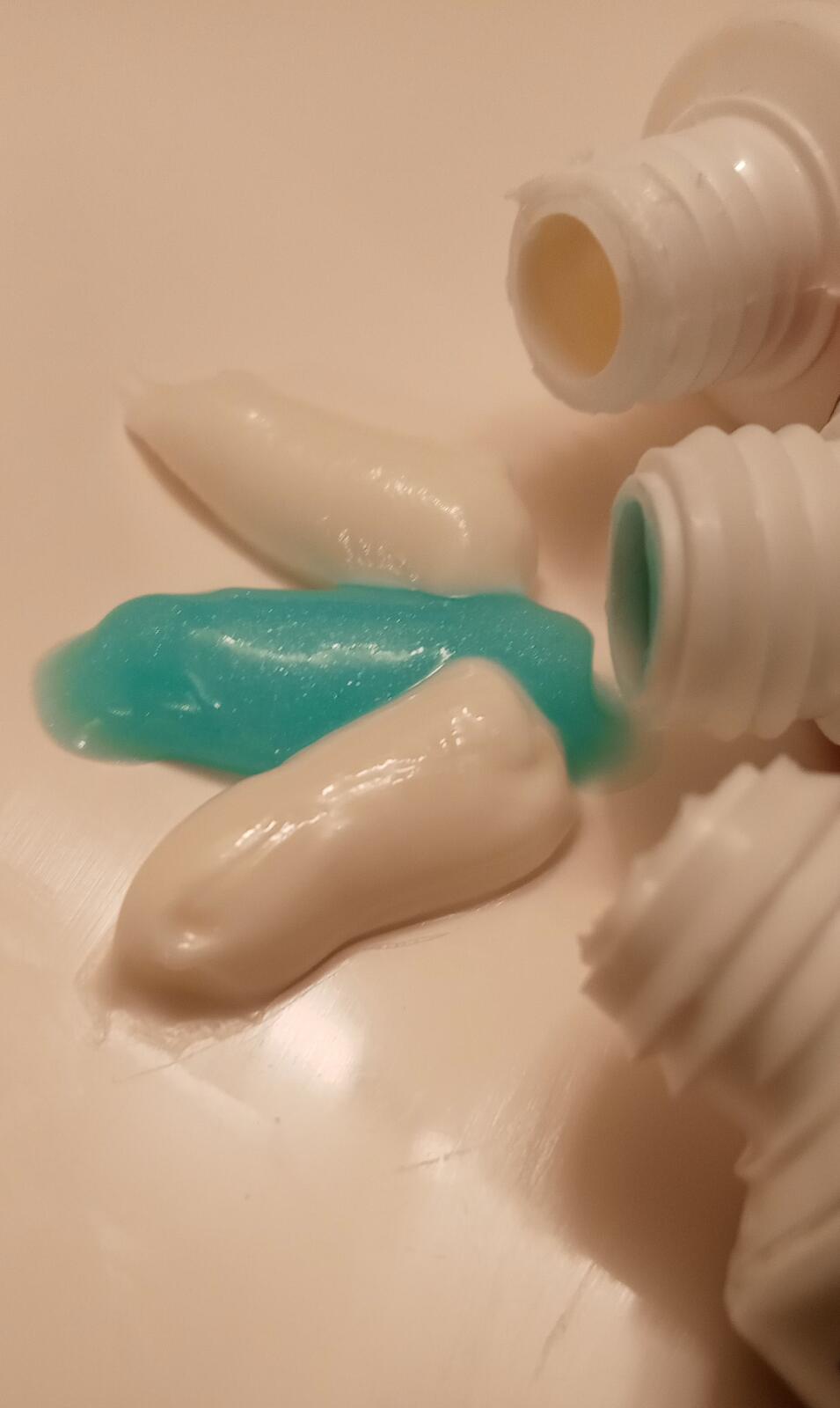
As a dental hygienist, I get LOTS of questions about toothpaste. Companies make a lot of claims about what their toothpastes do, from whitening to enamel protection. Basically, so long as a toothpaste has some kind of fluoride in it, that's what should be used. Fluoride is necessary to remineralize and protect teeth. 

Some toothpastes have ingredients such as stannous fluoride and potassium nitrate that can help with sensitivity. Potassium nitrate has worked for me personally. Since sensitivity can be caused by various dental issues including receding gums, cavities, and dry mouth, sensitivity should be discussed with your dentist or dental hygienist. 

I work at two dental offices and the toothpaste samples given to patients vary. I rely on my colleagues and my professional network to learn about any problems or issues with toothpastes rather than claims from the companies that make them. For example, there was a toothpaste on the market that had blue beads in it. When hygienists began finding these beads embedded in people's gums, the alarm was sounded and the manufacturer corrected the problem. Stannous fluoride has had issues as well. It was found to stain the teeth and manufacturers have since added ingredients to counteract this. 

In addition to stannous fluoride, sodium fluoride and sodium monofluorophosphate can be found in toothpastes. They are all effective and essentially do the same thing: provide some fluoride directly to the teeth and into the saliva. A dentist may prescribe a toothpaste with a higher amount of fluoride if a patient needs it due to their dental condition.

Finally, teeth must be brushed regularly regardless of the type of fluoride in the toothpaste. It seems simple, but people rarely brush for long enough, or brush only once a day. Brushing and flossing physically removes plaque germs from the teeth and gums. While toothpaste is important, this is the most important aspect of caring for the teeth. Brushing the teeth 2 to 3 times a day for 2 minutes (set a timer) will clean teeth and create a healthy mouth.

These blog posts are not intended to treat, diagnose, cure, or advise about any dental or medical condition. Please see your dentist or doctor for any treatment you need. 


Sunday, March 20, 2022

Happy World Oral Health Day 2022!

Taking care of your teeth has huge payoffs for overall health and takes only a couple of minutes a day!


Sunday, February 13, 2022

Hamsters, Cocoa Krispies and COVID

I haven't posted in a while, but this study on how and why COVID causes loss of smell, called anosmia, caught my eye. Apparently, hamsters are really fond of Cocoa Krispies. Researchers took advantage of this to see how long it would take hamsters infected with COVID to find the treats in their bedding. Turns out, hamsters who weren't sick and hamsters with the flu could find them within seconds, but hamsters with COVID didn't even bother to look. Couldn't smell them. COVID clogs their little sniffer systems with gunk due to inflammation, causing confusion in the nose nerves. The nerves aren't damaged but temporarily too busy to pick up scents. The same process is thought to happen in humans. Cocoa Krispies aren't my thing, but it was a bummer to not be able to smell my morning coffee when I had COVID. If you want to read a more scientific explanation of all this, here is the link to the article in Scientific American: https://www.scientificamerican.com/article/covid-smell-loss-and-long-covid-linked-to-inflammation1/


Wednesday, May 26, 2021

LA is hip on teeth

Lights, camera, action! Los Angeles may be known as the movie capital of the world, but did you know they are so 'with it' when it comes to tooth health? LA County has embarked on a massive campaign around tooth health on social media, TV, and radio. Included are great videos and engaging materials to bring the health of the mouth, especially for children, top of mind. 

Here is an adorable video they created:


Check out the entire campaign here:

Saturday, June 27, 2020

Your Teeth and COVID

Like many industries and professions, dentistry has changed as a result of COVID. There are new recommendations and guidelines, and dental professionals are striving to ensure the safety of patients and staff as offices open back up.

So what has changed? As a patient there are many new procedures you may encounter when you go for dental treatment or for a dental cleaning. Here are some new things you may find:

Your dentist or dental office staff calls you prior to the appointment to ask you questions. These include questions about COVID-like symptoms, any new medical conditions or medications, and recent travel. You may be asked to do a "teledental" call that includes video to evaluate the problem you are having or if an appointment is needed at this time.

You are asked to wait outside or in your car prior to your appointment, or find that you are the only person in the waiting room. In the waiting room, there will no longer be any reading materials, so bring your own! 

The dental office will request you wear a mask or face covering over your nose and mouth to your appointment. How will you have your teeth worked on then? More about that in a bit.

Your temperature will be taken. A temperature of 100.4 or higher is considered a fever and you will be asked to reschedule your appointment. If you aren't feeling well, save yourself the trouble and stay home. 

You will be asked screening questions, again. A lot can actually happen in 24 to 48 hours when it comes to COVID. Depending on the area and infection rate, some dental and medical offices may require patients to have COVID testing (such as a nasal swab to test for active viral infection) prior to the appointment.

You may be asked to move about the office in a certain way. Dental offices with more than one accessible entrance and exit may ask that you enter in one door and leave through another. Offices with open bay areas may ask that you take a certain route as you walk. Often, this will be explained to you prior to your appointment.

Hygiene on Planet COVID
Once you have gotten to this point, the dentist, dental assistant, and dental hygienist, may look like people equipped to do hazmat decontamination. Starting at the top, hair coverings, goggles, face shields, masks, respirators, gloves, full lab coats, disposable gowns, and shoe coverings are being worn over traditional scrubs.

The exam or treatment room will have some new equipment, too, such as air filter units and/or new suction equipment designed to remove aerosols formed during treatment.

You will be asked to pre-rinse with a solution of hydrogen peroxide or similar type of rinse. This is when you finally remove your mask! 

You may find that your teeth are cleaned using tools different than those you are familiar with. Many dental hygienists are forgoing the use of electronic instruments, such as a cavitron, because they create aerosols that can contain the virus and take a long time to settle. Instead they are using hand scaling instruments. No worries there, your dental hygienist is a trained professional, however, it may take longer to have your teeth cleaned. 

In dentistry, infection control is done in a way that treats all patients as infectious. Because a person with COVID can be asymptomatic and still spread the virus, keeping aerosols as low as possible is considered to be safer. Likewise, your dentist may treat your small cavity with methods that don't require drilling, such as silver diamine fluoride, or interim restorative materials, that require less drilling. This may depend on what is going on in your community with regard to COVID rates of infection as well as your dental condition.

Your hygienist may not be her usual talkative self. Everyone has different personalities, but dental hygienists are known to be talkers, (if I do say so myself and may be so bold to generalize.) With all the extra equipment and new ways of working, your hygienist may not be up to conversation. 

These times are difficult, to say the least, and there is still much unknown about SARS-CoV-2, the virus that causes COVID-19. It is important that everyone follow the recommended precautions to keep each other safe. If you are nervous about going to your dental appointment and do not have an urgent or emergency dental problem, it may be better to postpone it. If you can delay your dental cleaning or treatment, make sure you are doing your daily home care of brushing with a fluoride toothpaste and flossing, and following any instructions from your dentist.  If you must or want to go for a dental appointment, make sure to ask any questions you may have about any new procedures you are asked to follow. If you are in pain or have a dental problem do not delay to call your dentist.

This blog and post are not intended to treat, diagnose, cure, or advise about any dental or medical condition. Please see your dentist or doctor for any treatment you need. Take care and be safe!


Friday, May 1, 2020

'Social Distance' Your Toothbrush

'Toothbrush distancing' photo:YM
In my post earlier this week, (https://bit.ly/3aNTgxG), I included a tip about getting rid of your toothbrush if you've been ill, letting toothbrushes air dry, and storing them in a cabinet. Coincidentally, I was on a conference call the following day with a group of dental professionals when the topic of toothbrush care and COVID was raised. For your information and interest, I am passing along a webpage that was shared.

Please check out these links:

https://www.unitedconcordia.com/docs/Dental_Distancing_infographic.pdf

https://www.unitedconcordia.com/docs/ToothbrushSafetyFlyer.pdf

Hoping you are safe and well.

This blog post is not intended to treat, diagnose, or cure, any dental or medical condition or disease. Please consult with your medical or dental provider if you are ill. The sources cited do not constitute endorsement of any product or business, but are gratefully acknowledged. Source: unitedconcordia.com (accessed April 30, 2020).

Tuesday, April 28, 2020

When little things become big problems

These past several months of COVID-19 crisis have proven that health is everything and when it comes to health, it's often the little things that count: wash your hands, cover your mouth when you cough, don't touch your face, stay home from work when ill. It seems so simple.

Tooth brushes. photo: YM
And as anyone can see, when the little things aren't taken care of, problems get worse, quickly. While the current measures are hard on everyone, they can still be accomplished: physical distancing, wearing masks or mouth and nose coverings, staying home if at all possible.

For those fortunate enough to be healthy, it is important to keep in mind the daily habits that can help most people emerge from this crisis with health intact. Among other things that can be done to stay healthy, take walks, work out, avoid overeating or too much snacking, keep in touch with loved ones by phone, video, or email, take any regularly needed medications, and brush and floss each day.

Brush and Floss. photo:YM
Currently, most dentists and dental professionals are seeing only emergency patients: those with pain, swelling, or infection. They are trying to keep people out of emergency rooms and safe. Preventative care, like regular dental cleanings, need to be postponed. Plaque, left to grow in the mouth and on the teeth, causes inflammation of the gums and increases inflammation in the body. A cavity, once it starts to form, gets larger without treatment. The daily practice of brushing at least two times a day with a fluoride toothpaste for two minutes and flossing at least once a day can help maintain oral health, and avoid a dental emergency.

If you haven't been taking care of your teeth like you could, now is the perfect time to start. Once it's part of a daily routine, it can remain so for the rest of your life.

Hoping that you and your loved ones are safe and well.

TIP: If you have been sick, throw away your old toothbrush and use a new one. Always allow your toothbrush to air dry and store it in a cabinet.

This blog is not intended to diagnose or treat any dental or medical condition. If you are feeling ill, contact your dental or medical provider. Stay safe and well.

Sunday, February 16, 2020

Teeth are for everyone

February is National Dental Children’s Health Month but it’s a good time to think about the health of your mouth no matter what your age. Dental health is a life-long endeavor and teeth need to be taken care of at every step along the way.
Women thinking of getting pregnant should go for a dental visit! Men who plan to be dads should go, too. Anyone planning to care for a child can decrease the risk of that child getting cavities by taking care of problems with their own teeth.
During pregnancy, dental care is totally safe and regular dental visits are encouraged. Inflammation in the mouth can affect the unborn child and is even associated with preterm birth.
Babies are born with all their baby teeth under their gums. Infant gums should be wiped with a soft, damp cloth after feedings to keep the mouth healthy because teeth start to come in at about 5 months of age. Breastfeeding a child is important to a child’s mouth development as it helps widen the roof of the mouth and contributes to having teeth that come in straight. A baby should never be put to bed with a bottle with anything in it but water as this can cause cavities. The American Academy of Pediatrics and the American Dental Association recommend a child’s first dental visit by age 1.
From the first tooth on, teeth should be brushed daily with a smear of fluoride tooth paste up to age three, a pea-sized amount ages three and up, and with supervision of brushing till age nine. Baby teeth really matter because they help with speech development and nutrition, and since kids lose them slowly until age 11 or 12, baby teeth are needed to hold the space for the adult, permanent teeth coming in.
Children should be encouraged to eat whole fruits and vegetables and avoid sugary drinks. A rule to live by for dental health is water anytime, milk with meals, sweet drinks - skip it! This goes for adults as well because ‘we are what we eat and drink’ and good nutrition is as important to teeth as it is to the rest of the body.
Adolescents, teens, and college-aged kids can really slack-off with personal hygiene and should be encouraged to continue with daily brushing and flossing. Scheduling regular dental visits during school breaks and summer breaks is a good way to ensure any dental problems are caught early. Adults are busy and can slack off on regular dental visits and hygiene, too.
total health-ym
There is especially a lack of flossing, which is needed to get rid of germs between teeth. Keeping floss handy and within reach at home, in the car, in your pack or purse, helps keep this good habit top of mind. Flossing keeps the gums healthy. Bleeding gums are not normal. Brushing and flossing regularly reduces bleeding and helps avoid worse problems with the gums and teeth down the road. It is important to see a dental professional right away if you are concerned about your teeth, gums, or having any mouth pain.
Finally, keeping your mouth healthy is not only good for your whole body, it is good for your wallet. A permanent, adult tooth that gets a cavity (which is an infection of the tooth) is now a weakened tooth. If the mouth continues to be neglected, that cavity can come back under a filling, get bigger, need a crown, a root canal, or even be lost and need to be replaced with a bridge or implant. It is estimated that one tooth can cost well over $6,000 to repair over a person’s lifetime.

Taking care of your teeth truly can pay off!

This blog and posts are not intended to diagnose or treat and should not be taken as medical or dental advice. If something is bothering you, say something. Your medical and dental professionals can help.

Tuesday, January 14, 2020

Hidden Pain

The Jon C Burr Foundation has developed the short documentary Hidden Pain: America's Oral Health Crisis. The film addresses the pain, suffering and enormous cost to the American people of not providing access to Oral Healthcare.   The purpose of the film is to shine a bright light on an issue that has grown in the darkness for far too long.  The film has been distributed to dental schools, community centers, churches and legislative offices in order to educate the public and encourage action. It can be viewed here: https://www.youtube.com/watch?v=4EETIhbiGBI&feature=youtu.be

For more information on the Jon C Burr Foundation visit: joncburr.org
photo source: https://www.cdc.gov/oralhealth/basics/adult-oral-health/index.html

Sunday, October 20, 2019

Interview With a Vampire: Taking a (healthy) Bite Out of Fall


October and thoughts turn to pumpkins, pumpkin spice, pumpkin lattes, (let just say all things pumpkin), fall leaves, crisp air, and Halloween. My thoughts, as they often do, turn to oral health and healthy teeth. Pondering this intersection of autumn with a sugar-laden holiday, who better, thought I, to ask about healthy teeth than a vampire? After all, their “lives” literally depend on good, strong teeth! But I was at a loss as to where to find such an enigmatic being. So, I did the only thing I could think of and posted an ad on Craig’s List as follows: “Looking for a vampire to interview for a blog post on oral health. Please respond to this ad using the job posting number indicated above.” I received only one reply but received it surprisingly quickly. What follows is a transcript of that interview.

Y: Hi. It’s so nice to meet you!
Vampire: Likewise. It is my pleasure.
Y: Do you mind if I record our conversation? Wait. Is it possible to record you?
Vampire: Audio, of course. Video, no.
Y: I appreciate you agreeing to meet with me.
Vampire: I appreciate that you were able to meet in the evening.
Y: (laughing) No problem. It’s not so late - it gets dark earlier this time of year.
Vampire: I also appreciate you meeting me at my home.
Y: Again, no problem. You do live in a rather remote area so thank you very much for having your driver pick me up. I would have never found it. By the way, that’s a beautiful car.
Vampire: It’s quite old, a classic. And thank you for not prying regarding the address. You understand, it’s important that I protect my privacy.
Y: Certainly, certainly. I understand. (sneeze)
Vampire: Bless you.
Y: Wow. You can say that?
Vampire: Sure. Just can’t do it. (laughing) I hope you don’t have a cold.
Y: No, it’s these darn allergies. It happens every fall. Hope I don’t ‘fall’ asleep. I had to take some antihistamines.
Vampire: I’m sorry you are suffering so.
Y: Really, it’s nothing. Shall we begin?
Vampire: Let’s.
Y: This is silly and I totally do respect your privacy, but you were rather reluctant to give me your name. What should I call you?
Vampire: Please call me Dave.
Y: Dave.
Vampire: You sound disappointed.
Y: Well, I kinda thought, you know, vampire, pretty mysterious, conjures up far off, mist-covered mountains….
Vampire: Well, Dave’s not actually my name but I thought you’d like something that’s accessible, for your readers. Is that all right?
Y: I do like that feeling of accessibility. You know, Dave, I think you’re right. Dave. It’s perfect.
Vampire: Terrific.
Y: So let’s jump right in. As a dental hygienist, I’m terribly interested in good oral health, and particularly in people who keep their teeth in great shape and how they do it.
Vampire: Naturally, you would be. You seem to have a wonderful, innate curiosity.
Y: Thanks. The thing is, Dave, and I think what makes this interview unique, is I can think of no other beings that would have more stock in maintaining oral health than vampires.
Vampire: You are right, of course. Our lives, well, you know what I mean, depend upon it.
Y: Now, when you say ‘lives’, you mean that you’re actually undead.
Vampire: Well, I think of it as living. There are others that would disagree. But I say, let’s agree to disagree. (laughing)
Y: (laughing) You are charming! I’d love for my readers to know what you do to maintain such wonderful oral health, such strong, shiny, white teeth, over centuries.
Vampire: It’s rather simple, really. I brush two times a day for two minutes each time, using a soft toothbrush and fluoride toothpaste.
Y: Anything else?
Vampire: Yes. I floss at least once a day and more often if I get someone – thing, stuck in my teeth.
Y: It’s that simple, isn’t it, Dave?
Vampire: Absolutely, yes.
Y: Let me ask you a more personal question.
Vampire: Yes.
Y: Have you ever have a cavity?
Vampire: I did. Back as a child, when I was mortal. The tooth decayed and I had to have it pulled. Dentistry was so awful back then. But I learned my lesson and took great care of my teeth from that day forward. Haven’t had any problems since.
Y: Let’s explore that experience a little more. How did you feel about it? To have decay, have a tooth pulled.
Vampire: It was a horror. I wouldn’t wish that on my worst enemy.
Y: It’s so gratifying to meet someone who values his oral health as much as you do, Dave. It is really such a pleasure to hear.
Vampire: Again, the pleasure is all mine.
Y: I do have another question.
Vampire: Please, go ahead.
Y: Let’s say, hypothetically, someone puts a wooden stake through your heart. Is anything left? Do the teeth remain? Movies are so sketchy on this point and other than some books, I have no point of reference. Sometimes the vampire dissolves, sometimes bursts into flames…I’m sorry. Have I offended you?
Vampire: No. However, I am a little uncomfortable with this line of questioning. You know, I have heard that teeth can withstand temperatures over 1,000 degrees Fahrenheit.
Y: Actually, up to 2,000.
Vampire: That is interesting. I really admire your knowledge and passion about this subject.
Y: It’s what I do, Dave. Thanks.
Vampire: You’re welcome.

Happy Halloween. (Photo YM)
Dave was such a great interview but the recording cuts off here and I have to admit I don’t remember much of the rest of the evening. Antihistamines really knock me out! My eyes seem to have developed a bit of sensitivity to light as well, but my doctor assures me it’s the allergies. Happy Halloween!

For another Halloween post from this blog click here: https://mydentalhygienist.blogspot.com/2015/10/

This post is not meant to treat, diagnose, or cure any disease or condition. Please visit your dentist or medical professional if you are not feeling well, and if you are feeling well - go for your regular check-ups. Do not contact Dave.